

There is a reason convertibles feel different along the coast. Slower roads, sea views, open promenades and long summer evenings all change how a car gets used and noticed. In these environments, the driving experience matters, but so does the way the car looks when parked outside cafés, lined up at meets or photographed against the coastline.
That is why styling plays such a big part in convertible ownership. A subtle windscreen banner, clean side decal or carefully placed stripe can completely change the character of a car without turning it into a full show build.
This guide looks at some of the best convertibles for coastal summer driving, along with the styling approaches that suit each one properly. Rather than focusing purely on performance figures or rankings, the aim is to help drivers choose a convertible that matches both their driving style and the look they want to achieve.
Why Convertibles Are Perfect for Coastal Summer Drives
Convertibles are ideal for coastal drives because they combine open-air driving, scenic visibility and a lifestyle-focused driving experience.
Coastal roads are rarely about outright speed. Most people use them for relaxed drives, weekend escapes and social trips where the surroundings matter as much as the destination. Lower-speed roads, changing scenery and open views suit convertibles naturally because the roof-down experience becomes part of the journey itself.
These routes also tend to involve:
- Seafront parking
- Café stops and promenades
- Weekend car meets
- Sunset drives
- Short scenic detours
That environment changes how styling is seen. With no fixed roofline interrupting the shape of the car, details like bonnet stripes, side graphics and windscreen decals become far more visible from outside the vehicle.
Convertibles also photograph differently in coastal settings. Natural light reflects more clearly across open bodywork, especially during early mornings or late afternoons. A well-placed decal can add definition to the shape of the car without overwhelming it.
The best styling upgrades usually work with the proportions of the vehicle rather than trying to transform it completely. Small details often create a cleaner result than large layered graphics, especially on convertibles, where every surface becomes more noticeable with the roof down.
What to Look for in the Best Convertibles for Summer
The best convertible depends on comfort, roof type, size, driving style and how the car will actually be used during summer.
For coastal driving, practical details matter more than many buyers expect. Wind exposure, parking conditions and road type all affect how enjoyable the car feels over longer periods.
| Factor | Why It Matters | Styling Impact |
| Roof type | Soft tops feel more open, hardtops improve insulation | Hardtops allow more graphic placement |
| Cabin comfort | Longer drives need supportive seating and airflow | Premium interiors usually suit cleaner styling |
| Size | Smaller cars suit tighter coastal roads and parking | Compact cars can carry bolder graphics |
| Wind noise | Coastal routes are often exposed | Windscreen banners can reduce glare visually |
| Boot space | Useful for day trips and weekends away | Less styling impact, but affects usability |
The way you intend to use the car should also influence how you personalise it.
For example:
- Daily-driven convertibles often suit simpler graphics that are easier to maintain
- Weekend cars can carry more expressive styling
- Luxury-focused models usually look better with restrained detailing
- Smaller convertibles tend to handle contrast graphics better than larger GT-style cars
The goal is consistency. The styling should feel like it belongs to the car rather than sitting on top of it.
Audi TT Roadster: Sleek Design with Everyday Usability
The Audi TT Roadster remains a popular used convertible thanks to its clean design and everyday usability, even though it is no longer in production.
It works particularly well for coastal driving because it combines compact dimensions with enough comfort for longer trips. The shape also suits scenic roads where visibility and manoeuvrability matter more than outright pace.
Styling the TT Roadster requires restraint. The body already has smooth curves and a balanced profile, so oversized graphics can interrupt the design surprisingly quickly.
The best approach usually includes:
- Thin lower-door decals
- Small rear-quarter graphics
- Minimal windscreen banners
- Satin finishes rather than heavy gloss contrast
Large layered graphics rarely improve the TT because there are few sharp body lines to anchor them visually. Simpler layouts nearly always age better, especially on silver, white or grey cars exposed regularly to coastal sunlight.
Owners wanting cleaner OEM-style detailing can check out the Audi car sticker collection for graphics that suit the TT’s smoother body shape.
Fiat 500C: Compact, Stylish, and Ideal for Seaside Towns
The Fiat 500C is ideal for coastal towns where compact size and personality matter more than outright performance.
It suits narrow streets, short seafront drives and busy summer parking far better than larger convertibles. The partially retractable roof also keeps more visual structure in place, which changes how graphics sit across the car.
Unlike more restrained sports convertibles, the 500C allows far more freedom stylistically. Colour, contrast and playful detailing feel natural here because the car already leans heavily into character and visibility.
The most effective styling choices usually include:
- Contrasting side decals
- Retro-inspired lettering
- Simple geometric graphics
- Bold colour pairings
Smaller cars naturally make graphics appear larger, so spacing becomes important. Busy layouts can quickly make the car feel cluttered, especially on darker paint colours.
Bright coastal settings tend to suit lighter palettes and cleaner shapes. Oversized aggressive graphics rarely match the personality of the 500C as well as playful, well-spaced detailing.
Drivers wanting more expressive styling inspiration see our Fiat car stickers collection for decals that suit the 500C’s compact proportions.
Mini Convertible: Fun, Iconic, and Built for Open-Air Driving
The Mini Convertible combines iconic design with huge customisation potential, making it one of the most visually adaptable options for summer driving.
Few convertibles suit graphics as naturally as the Mini. The upright shape, contrasting roof design and defined body sections create clear placement areas for stripes and decals without making the car feel overcrowded.
Bonnet stripes remain the obvious choice, but the Mini also works well with:
- Roof graphics
- Side stripes
- Windscreen banners
- Contrasting mirror accents
- Lower sill decals
Symmetry matters heavily on this car because the shape is so structured. Misaligned graphics stand out immediately, especially in bright sunlight near the coast.
The Mini also responds well to bolder contrast than most convertibles. White roofs, black trim and brighter paint colours already create separation across the body, so stronger decals usually feel more integrated rather than excessive.
Drivers wanting classic stripe layouts or more modern geometric styling head over to our Mini car stickers collection for ideas that work with the car’s proportions.
Mazda MX-5: Lightweight Handling and Pure Driving Enjoyment
The Mazda MX-5 is one of the most balanced convertibles for summer driving, combining lightweight handling with genuine enthusiast appeal.
Its compact footprint and rear-wheel-drive layout make it perfectly suited to changing coastal roads where tighter bends and uneven surfaces are common. It feels just as comfortable cruising along open seafront roads as it does navigating narrower routes inland.
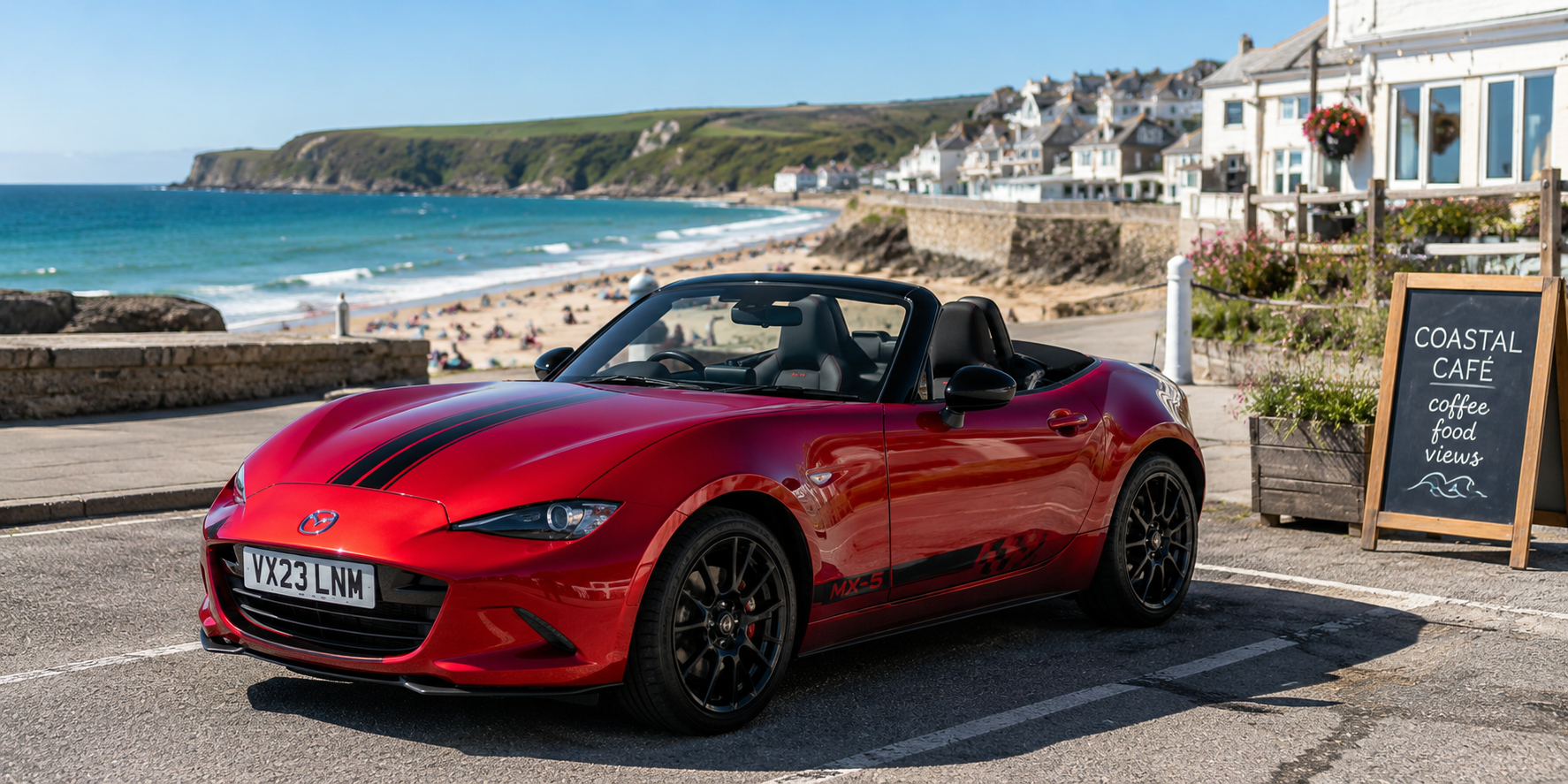
Styling an MX-5 depends largely on the direction the owner wants to take.
Some drivers lean towards:
- Track-inspired decals
- Motorsport graphics
- Contrasting bonnet stripes
- Race-number styling
Others prefer:
- Minimal side graphics
- Small rear-quarter details
- Factory-inspired accents
- Subtle monochrome finishes
Both approaches can work because the MX-5 has enough motorsport heritage to support more expressive styling without looking forced.
The biggest mistake is overcrowding the body. The MX-5 is physically small, so oversized graphics can dominate the shape very quickly. Narrower decals with cleaner spacing usually suit the car better than large layered designs.
Enthusiasts looking for track-inspired or OEM-style graphics can find more in our Mazda car sticker collection for styling ideas that suit the MX-5’s proportions.
BMW Z4: Premium Comfort Meets Sporty Performance
The BMW Z4 offers a more refined convertible experience, balancing comfort and performance for longer coastal drives.
Compared to smaller convertibles, the Z4 feels more relaxed and more mature in the way it approaches open-top driving. The long bonnet, lower seating position and wider proportions make it better suited to touring-style coastal routes rather than tighter town driving.
That also affects how it should be styled.
The Z4 usually looks best with:
- Thin lower-body graphics
- Monochrome detailing
- Satin black accents
- Narrow windscreen banners
Heavy contrast graphics can make the body appear visually longer and heavier than intended, particularly with the roof raised. Simpler detailing tends to preserve the cleaner GT-style appearance that suits the car naturally.
Because the cabin sits further back in the profile, spacing becomes important. Graphics placed too high on the doors can visually interrupt the balance between the bonnet and rear deck.
Drivers wanting understated styling that complements the car rather than dominating it can take a look at our BMW car sticker collection for cleaner decal options.
Mercedes-Benz C-Class Cabriolet: Refined Cruising with Luxury Features
The Mercedes-Benz C-Class Cabriolet is best viewed as a used luxury option, offering comfort and relaxed cruising rather than current production availability.
This is a convertible designed for longer journeys and quieter driving environments. Coastal roads suit it particularly well because the focus is less on sharp handling and more on comfort with the roof down.
That luxury-focused character should carry through into the styling.
The cleanest results usually come from:
- Tone-on-tone graphics
- Small lower-body accents
- Minimal windscreen decals
- Satin silver or grey finishes
Bright colours and oversized graphics tend to clash with the car’s smoother, executive styling. The Cabriolet already carries enough visual presence through its proportions and chrome detailing.
Material finish also matters more here than on smaller convertibles. Poor-quality vinyl or heavily reflective graphics can look out of place against premium paintwork, especially in bright coastal sunlight.
Owners wanting understated styling ideas can explore our Mercedes car sticker collection for graphics that suit the Cabriolet’s cleaner design language.
Porsche 718 Boxster: High-Performance Convertible for Enthusiasts
The Porsche 718 Boxster suits drivers who want sharper handling, precise steering and a convertible that feels genuinely focused on the road.
It carries a more purposeful appearance than most cars in this list, particularly along open coastal routes where the lower stance and wider rear profile become more noticeable.
That means styling needs to feel deliberate.
The Boxster responds particularly well to:
- Heritage-inspired side scripts
- Thin motorsport stripes
- Satin side graphics
- Factory-style detailing
Large layered graphics rarely suit the car because the shape already carries plenty of visual drama. One carefully positioned decal often creates a more convincing result than several competing elements.
Colour matching also matters heavily on Porsche models. Neutral or factory-inspired tones usually feel more appropriate than bright, contrasting graphics, especially on darker paint finishes.
Drivers wanting cleaner motorsport-inspired detailing can browse our Porsche car sticker collection for graphics that suit the 718 Boxster’s proportions.
Hardtop vs Soft Top Convertibles: Which Is Better for Coastal Driving?
Soft tops suit coastal driving for openness and simplicity, while hardtops offer better insulation and security.
For most scenic summer drives, soft tops create the more traditional convertible experience. They feel lighter, more open and better connected to the surroundings, particularly on slower coastal routes.
Hardtops offer advantages in:
- Wind reduction
- Cabin insulation
- Long-distance comfort
- Security when parked
From a styling perspective, roof type changes what is visually possible.
| Feature | Soft Top | Hardtop |
| Driving feel | More open | More insulated |
| Wind exposure | Higher | Lower |
| Roof graphics | Limited | Greater flexibility |
| Long-distance comfort | Lower | Higher |
| Coastal protection | Less resistant | More resistant |
Soft tops generally require cleaner, lower-positioned graphics because the fabric roof interrupts the shape of the car visually. Hardtops allow more freedom with roof graphics and upper-body styling because the profile remains uninterrupted.
Manual vs Automatic Convertibles: What Should You Choose?
Manual gearboxes suit driving engagement, while automatic convertibles usually suit relaxed coastal cruising more naturally.
The decision depends less on performance and more on how the car will actually be used during the summer.
Manual convertibles suit:
- Quiet scenic roads
- Enthusiast driving
- Weekend-focused use
- Drivers who prefer more involvement
Automatic convertibles suit:
- Busier coastal towns
- Longer journeys
- Stop-start summer traffic
- More relaxed cruising
This choice also affects how often the car is likely to be used. Daily-driven convertibles exposed regularly to coastal conditions need styling materials that can handle repeated sunlight, salt exposure and cleaning without fading or lifting around the edges.
Tips for Driving a Convertible Along Coastal Roads
Coastal driving requires more awareness of wind, salt exposure and sunlight than many owners expect.
Open-top cars spend more time exposed directly to the environment, which means paintwork, trim and graphics all deal with harsher conditions over time.
The biggest issues usually include:
- Salt residue settling onto paint and vinyl
- Increased UV exposure
- Stronger crosswinds near exposed roads
- Moisture sitting around any decal edges
These conditions make material quality more important. Poorly applied vinyl or cheaper finishes tend to show edge lift and fading much faster when exposed to coastal air repeatedly.
A few practical habits make a noticeable difference:
- Wash the car more frequently during the summer
- Remove salt residue quickly after longer drives
- Avoid parking directly beside sea spray where possible
- Check decal edges regularly in hotter weather
Application also matters. Vinyl applied correctly to a clean surface in the right temperature conditions will usually last significantly longer than rushed installations applied outdoors in direct sunlight.
Best Time of Day for a Coastal Convertible Drive
Early morning and late afternoon usually provide the best conditions for coastal convertible driving.
These times offer:
- Lower traffic levels
- Softer sunlight
- Reduced glare
- Cooler temperatures
- Less wind exposure
Early mornings tend to feel calmer and less crowded, particularly in busy seaside locations. Late afternoons and evenings create a more social atmosphere with cafés, promenades and coastal roads becoming more active.
Lighting also changes how the car looks. Softer sunlight tends to highlight paintwork and decals more evenly, especially satin or matte finishes that can appear overly reflective during the middle of the day.
For owners who enjoy photographing their cars, these times usually create cleaner reflections and better contrast across graphics without harsh shadows interrupting the body lines.
Final Thoughts on the Best Convertibles for Coastal Summer Drives
The best convertible is the one that matches both your driving style and the way you want the car to look during summer ownership.
Some cars naturally suit bolder graphics and contrast styling. Others look far better with restrained detailing that works quietly with the body shape. Coastal driving adds another layer because sunlight, wind exposure and open surroundings make every styling choice more visible.
The most effective personalisation usually comes from understanding the proportions of the car first, then adding graphics that support the shape rather than compete with it.
If you’ve got any more questions about graphics to deck out your convertible or any other vehicle you have, then contact us at Demon Plates today for more help and support.


