

Race numbers identify vehicles competing in motorsport events. They help officials, teams and spectators distinguish individual entries, particularly when several cars share similar colours, bodywork or liveries.
However, displaying a number involves more than choosing a favourite digit and applying it to a door. Different championships have their own requirements for number allocation, size, positioning and presentation.
Understanding these differences helps competitors prepare suitable graphics, avoid ordering mistakes and ensure their vehicle identification follows the relevant event regulations.
What Are Race Numbers?
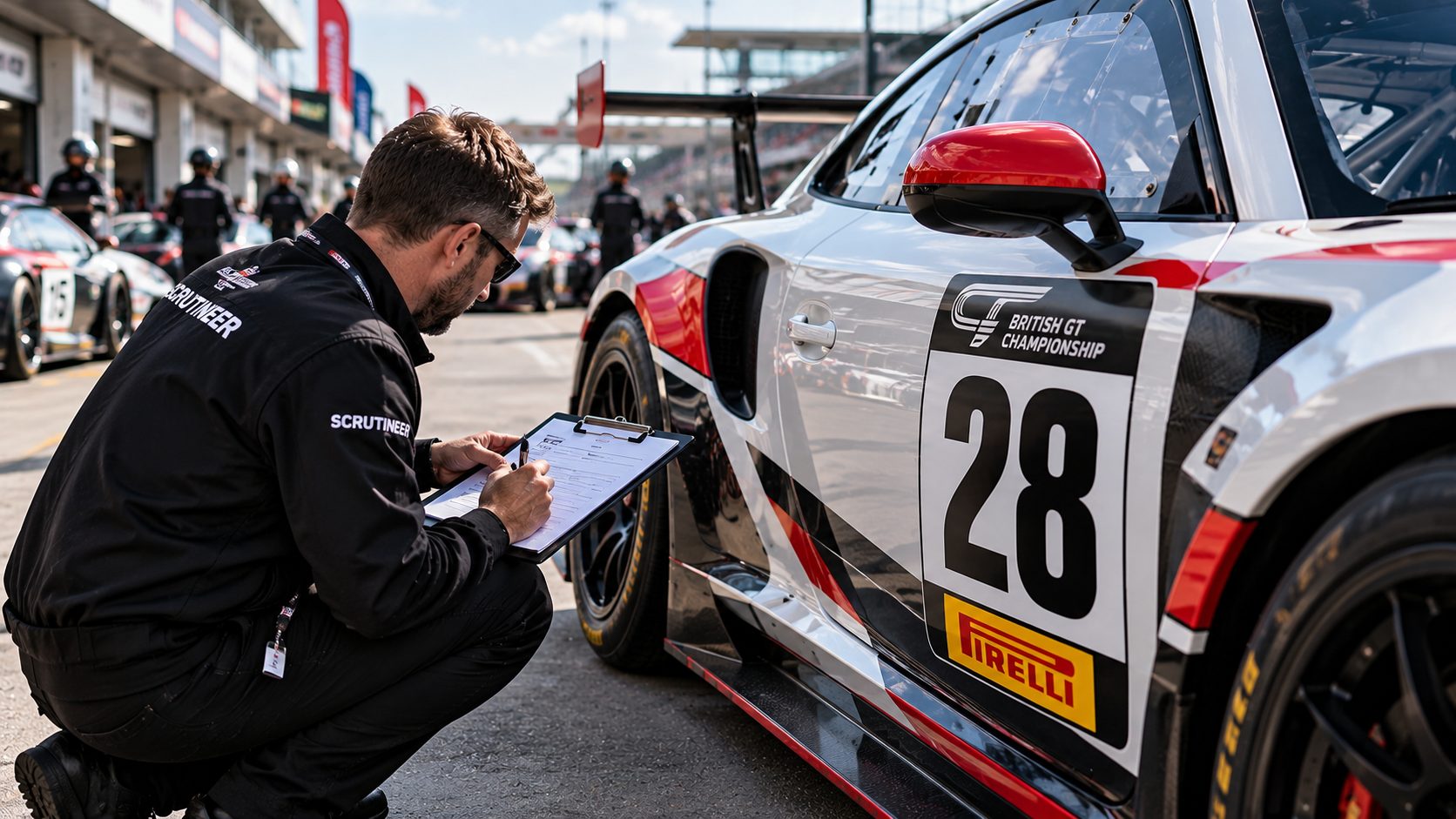
Race numbers are numerical identifiers displayed on motorsport vehicles to distinguish competitors during an event. They form part of a vehicle’s competition identification rather than serving purely as decoration.
A race number might appear alongside sponsor logos, stripes and other elements of a vehicle’s livery. Its primary purpose remains identification, regardless of the surrounding design.
For example, two drivers competing in identical models with matching paintwork need clearly distinguishable numbers. This allows people watching the event to recognise each entry without relying entirely on vehicle appearance.
Why Are Race Numbers Used in Motorsport?
Race numbers help identify individual competition entries, allowing officials, teams and spectators to distinguish vehicles during events.
They serve several purposes:
- Event officials: Identify vehicles during competition and event procedures.
- Teams and support crews: Recognise individual entries more easily.
- Spectators: Follow particular competitors throughout an event.
- Photographers and commentators: Identify vehicles accurately when covering races.
Clear numbering matters when vehicles share similar colours or liveries. Strong contrast, readable lettering and suitable positioning make numbers easier to recognise, particularly at speed.
How Are Race Numbers Assigned to Drivers and Teams?
There is no universal system for allocating motorsport race numbers. Depending on the competition, organisers may assign numbers, allow competitors to request available options or apply championship-specific allocation rules.
The relevant regulations determine which system applies.
Can Drivers Choose Their Own Race Number?
Some championships permit competitors to request particular numbers, subject to availability and organiser approval. Others allocate numbers according to their own procedures.
A driver entering a club competition should therefore confirm their allocated number before commissioning vehicle graphics.
Choosing a preferred number without checking availability could mean purchasing graphics that cannot be used at the event.
Do Drivers Always Keep the Same Number?
Drivers do not necessarily retain identical numbers throughout their motorsport careers.
Some championships operate systems that allow continuity between seasons. Other competitions may issue numbers for individual events or allocate them differently each year.
Competitors entering multiple championships should check whether their existing graphics remain suitable before attending another event.
Where Are Race Numbers Displayed on Motorsport Vehicles?
Race-number placement depends on competition regulations. Drivers should confirm the required positions before ordering graphics.
Depending on the event, numbers may appear on doors, side panels or windows.
Before ordering, check:
- Placement: Identify required display areas.
- Position: Check whether multiple locations are necessary.
- Background: Confirm any specified colours or panels.
- Fitment: Consider available space and bodywork curves.
For example, ordering door graphics without checking event requirements could result in unsuitable sizing or placement, leading to unnecessary replacement costs.
Are There Rules for Race Number Size and Style?
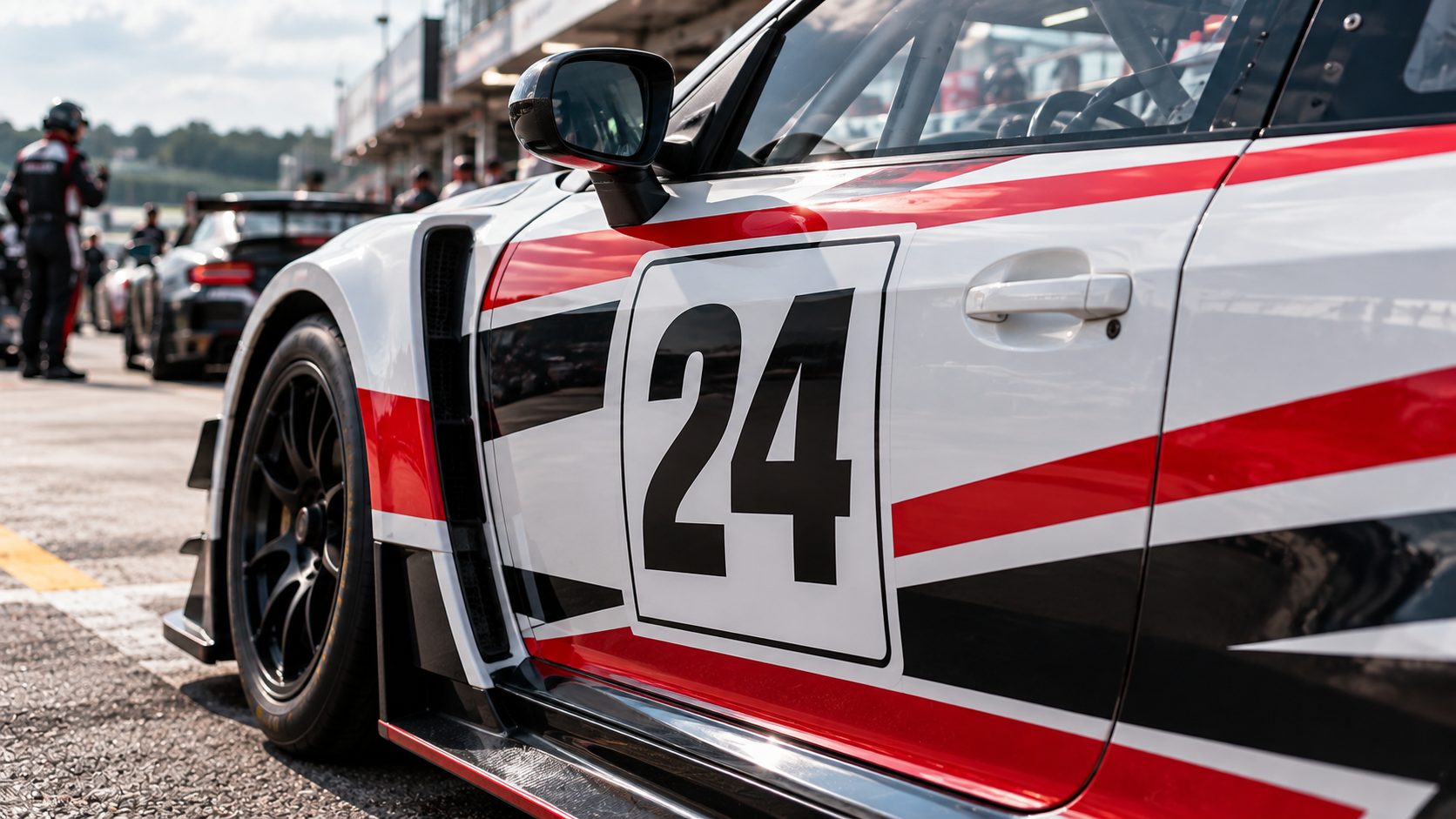
Many motorsport competitions specify how numbers must appear, although requirements differ between organisers and disciplines. Competitors should consult their current championship regulations rather than copying another vehicle’s design.
Rules may cover character height, stroke width, typography, colours, backgrounds and positioning.
These details can influence the appearance of the wider livery. A competitor planning sponsor graphics and racing stripes should establish the mandatory number areas first, leaving sufficient space for compliant identification.
Why Does Legibility Matter?
Legibility determines how easily someone can recognise a race number under different viewing conditions.
Effective number graphics should consider:
- Colour contrast: Dark digits against a similarly dark panel can become difficult to distinguish.
- Typography: Clear, recognisable numerals are preferable to elaborate lettering.
- Proportions: Number dimensions should support readability while meeting event requirements.
- Positioning: Panel gaps, curves and vehicle features can interrupt the design.
- Backgrounds: A contrasting panel can improve visibility where permitted or required.
A stylised number might complement an aggressive racing livery, yet lose clarity when viewed from a distance.
The strongest design balances visual appearance with the identification requirements of the competition.
How Do Race Numbers Differ Between Motorsport Categories?
Race-number conventions differ across motorsport because each discipline operates under its own regulations and event procedures.
Circuit racing, rallying and motorcycle competition can involve different vehicle shapes, identification arrangements and available display areas.
A circuit racing car may have substantial door space for number graphics, while a motorcycle presents smaller, differently shaped surfaces. Rally competitors must also account for the identification requirements of their particular event.
These differences make copying another competitor’s number layout unreliable.
For readers interested in how visual identification has developed alongside vehicle liveries, Demon Graphics also explores the history of race car graphics.
Race Numbers vs Competition Numbers: Is There a Difference?
The terms “race number” and “competition number” can describe the same identifying feature, although terminology varies between motorsport organisations.
“Competition number” is particularly useful when discussing disciplines beyond conventional circuit racing.
Rather than assuming the terms represent separate technical categories, follow the wording used in your event documentation. This keeps enquiries, artwork instructions and regulatory checks consistent.
How Are Race Numbers Added to Motorsport Vehicles?
Race numbers can be applied using adhesive vinyl graphics once the required dimensions, placement and design have been confirmed.
Before application, ensure the vehicle’s surface is clean, dry and free from wax or contaminants. Check for paint damage and follow the manufacturer’s temperature guidelines to support proper adhesion.
Position graphics carefully around bodywork curves, applying consistent pressure to prevent trapped air and lifting edges.
Demon Graphics offers car racing stickers for motorsport-inspired styling. Competitors should check their event regulations before purchasing to ensure their chosen graphics meet the relevant requirements for size, visibility and positioning.
What Should You Check Before Ordering Race Number Graphics?
Before ordering race-number graphics, confirm your allocated number and the applicable requirements for dimensions, position, colour and presentation.
Use this checklist:
- Confirm your number with the event organiser.
- Read the current championship and event regulations.
- Record the required character dimensions and background specifications.
- Identify every mandatory display position.
- Check contrast against your existing livery.
- Measure the available vehicle panels.
- Confirm the graphic material and application requirements.
- Resolve any uncertainty with the organiser before ordering.
Once you’ve confirmed your requirements, contact us to discuss your vehicle graphics and find an option suited to your competition needs.


