

Car decals usually do not fade quickly unless something accelerates the process. In most cases, fading comes down to four main factors: material quality, UV exposure, print quality and how the decal is maintained after installation.
That means fading is often avoidable.
At Demon Graphics, one of the biggest misconceptions we see is people assuming all decals wear out at the same rate. They do not. Two decals may look identical on day one, but after months outdoors, the difference between cheap and premium materials becomes obvious.
If you have ever wondered why car decals fade, the answer is rarely just sunlight alone.
Not All Car Decals Are Made to the Same Standard
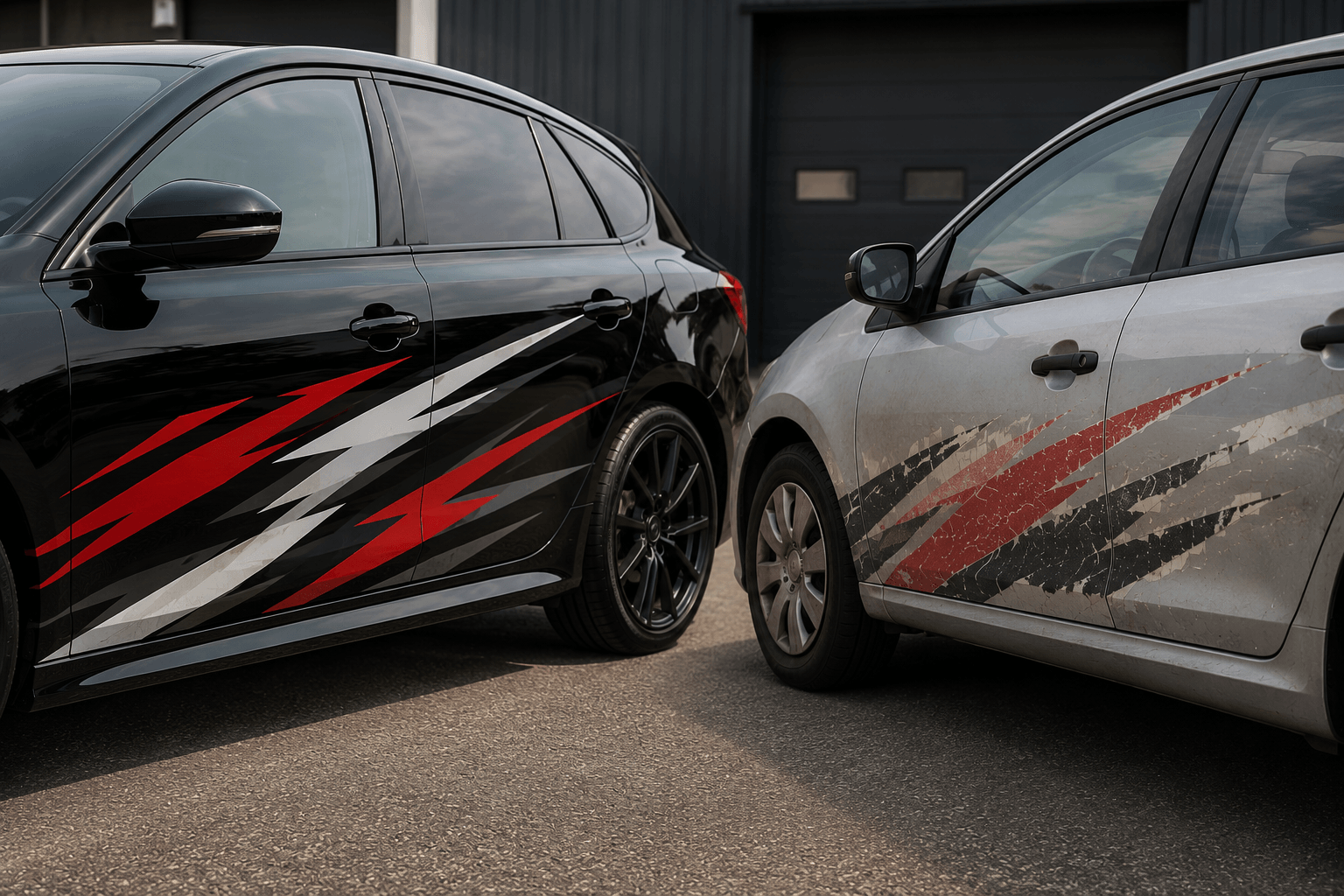
Two decals can look identical when new but perform very differently after months outdoors.
This is where many buyers get caught out. Low-cost decals often look perfectly acceptable straight out of the packaging, but appearance tells you very little about long-term durability.
Here is a simple comparison:
| Feature | Budget Vinyl | Premium Vinyl |
| UV resistance | Lower | Higher |
| Adhesive quality | Inconsistent | More stable |
| Flexibility | Limited | Better contour fit |
| Outdoor durability | Often weaker | Typically stronger |
The problem is not just appearance. Cheaper materials often become brittle faster, lose colour sooner and struggle with heat cycling.
That false economy is why the cheapest option often becomes the most expensive long-term.
Extended Exposure to UV Sunlight
UV exposure is one of the fastest ways to fade printed decals because sunlight gradually breaks down pigments and vinyl surfaces.
Sunlight damages both colour and material structure.
Vehicles parked outdoors every day, especially in direct sun, face much higher UV stress than garage-kept cars.
You may notice fading appears uneven. Some colours degrade faster than others.
For example:
- Reds often lose vibrancy first
- Bright colours may wash out faster
- Dark inks can become grey or dull
UV damage happens gradually, which makes it easy to miss until the decal suddenly looks tired.
Low Quality Vinyl Materials
Lower-grade vinyl often contains weaker pigments, adhesives and surface coatings that degrade faster.
One important distinction is calendared vs cast vinyl.
Calendared vinyl is usually thicker, less flexible and often chosen for lower-cost applications.
Cast vinyl is generally more stable and better suited for demanding surfaces or long-term exterior use.
This difference matters because lower-grade materials can shrink over time, especially around curved panels.
Understanding the difference between budget and premium materials is exactly why choosing high-quality car stickers matters before buying.
Poor Lamination Protection
Lamination acts as a protective barrier against UV, scratches and chemical exposure.
Think of laminate as armour for printed graphics.
A protective layer helps reduce:
- UV penetration
- Surface scratching
- Chemical staining
- Abrasion from washing
Gloss laminate can improve colour vibrancy, while matte laminate creates a softer finish.
When Unlaminated Decals Make Sense
Not every decal needs lamination.
Simple cut vinyl lettering or single-colour decals may not always require it because there is no printed ink to protect.
Printed graphics benefit most.
Frequent Exposure to Harsh Weather Conditions
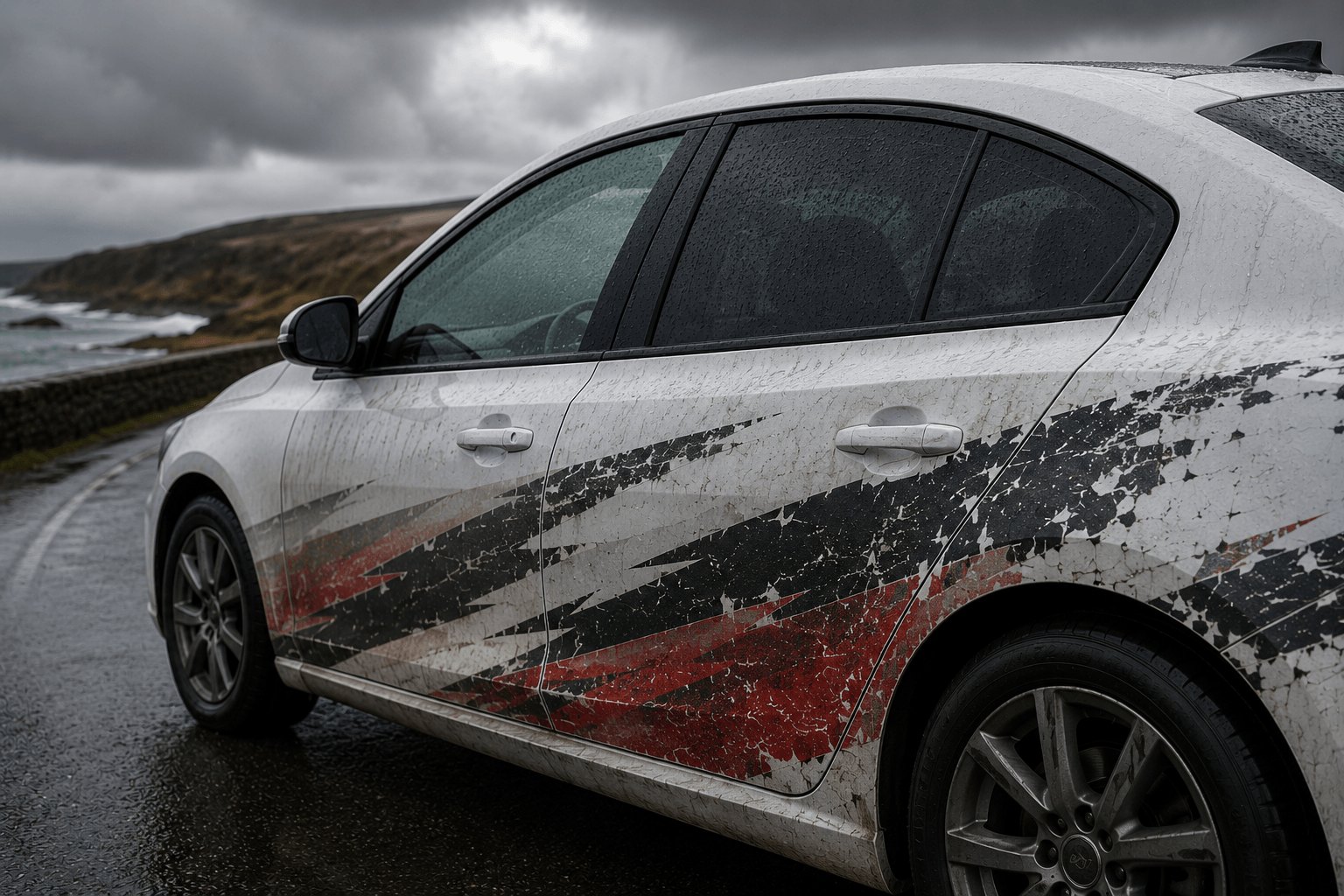
Rain, frost, road salt and prolonged moisture can speed up vinyl deterioration.
UK weather is particularly harsh because it constantly cycles between wet, cold and mild conditions.
That repeated expansion and contraction places stress on both the adhesive and material.
Winter introduces extra risks from:
- Salt
- Road grime
- Standing moisture
- Ice build-up
Over time, weather exposure accelerates wear.
Incorrect Cleaning Products and Chemicals
Strong cleaning chemicals can strip protective layers and dull printed graphics. This is a common mistake.
Solvents, aggressive degreasers and strong traffic film removers can weaken protective coatings.
In some cases, the decal fades faster, not because the vinyl is poor, but because the cleaning routine is too harsh.
This matters whether you are maintaining existing graphics or comparing new car stickers, because even premium materials benefit from careful cleaning.
Gentle pH-neutral products are usually safer.
Improper Application Techniques
Poor installation can shorten decal lifespan even when premium vinyl is used.
Even excellent vinyl performs badly if fitted poorly.
Common installation problems include:
- Trapped air bubbles
- Dirty paint surfaces
- Weak edge adhesion
- Poor alignment on curves
Why Prep Matters
Surface preparation directly affects longevity.
Any wax, polish residue or dirt left underneath can weaken adhesive bonding.
That often leads to early edge lift.
Constant Pressure Washing and Abrasion
Aggressive pressure washing can weaken edges and gradually damage print surfaces.
Pressure washers are not automatically harmful, but misuse causes problems.
The biggest mistake is spraying directly at decal edges from close range.
That can:
- Force water under edges
- Lift corners
- Erode laminate over time
Brush abrasion also adds wear, so consider softer washing methods that are safer.
Cheap Printing Methods and Ink Quality
Cheap printing methods often use inks that fade faster under UV and heat.
Material quality matters, but so does what is printed onto it. Low-quality inks often have weaker pigment stability.
That means colour fade may happen long before the vinyl itself fails.
Poor print consistency can also cause:
- Patchy colour loss
- Uneven fading
- Dull finishes
This is why print quality matters just as much as substrate quality.
High Heat and Temperature Changes
Repeated heating and cooling causes expansion and contraction that stresses vinyl.
Car panels get hotter than many people realise.
Dark panels in summer can reach very high surface temperatures, especially under direct sunlight.
Repeated heat cycling stresses:
- Adhesives
- Laminate
- Print layers
- Vinyl structure
Over time, that weakens durability.
Lack of Ongoing Sticker Maintenance
Even premium decals need occasional maintenance to preserve appearance.
Maintenance does not need to be complicated.
A simple routine helps:
- Wash regularly with gentle products
- Remove dirt quickly
- Check for lifting edges
- Avoid prolonged contamination
Small issues become bigger when ignored.
Differences Between Indoor and Outdoor Vinyl
Indoor vinyl is not designed for long-term outdoor exposure and fades far faster on vehicles.
This is a surprisingly common issue with cheap suppliers.
Indoor-rated vinyl may be cheaper, but it lacks the weather resistance required for vehicle use.
Key differences include:
- weaker adhesives
- lower UV resistance
- less flexible film
A decal designed for indoor walls should never be treated as automotive-grade material.
How Can You Make Car Decals Last Longer?
Good care and better materials make the biggest difference.
If you want longer-lasting decals:
- Park in shade when possible
- Wash gently
- Avoid harsh chemicals
- Choose premium vinyl
- Inspect edges regularly
If you want more maintenance advice, Demon Graphics’ guide to making car stickers last longer covers practical habits that help preserve both colour and adhesion.
Car decals, as we’ve discussed, fade because several small factors combine rather than one major failure.
UV exposure, low-quality vinyl, poor print methods and harsh maintenance all accelerate fading.
The biggest takeaway is simple: not all decals are made equally.
Quality materials, proper application and sensible care can make a huge difference to how long graphics stay sharp and vibrant.
If you want durable decals suited to real-world driving conditions, or need help choosing the right material, feel free to contact us for tailored advice.


